- Pagina inicial /
- Livros /
- Medical Books /
- Medicine /
- Internal Medicine /
- Neurology /
- Neuroscience /
- Vision: A Computational Investigation into th...
0 ratings


Artigo n.º:
6577566
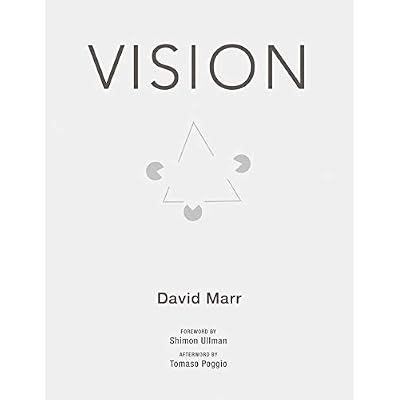
Vision: A Computational Investigation into the Human Representation and Processing of Visual Information (Mit Press)
Artigo n.º:
6577566
XOF 28921
Price Details
Excluding Shipping & Custom charges ( Shipping and custom charges will be calculated on checkout )
*All items will import from EUA
0 ratings
Escreva um comentário
Em estoque
 Importado da loja USA
QTY:
Encomende já e receba por volta de Quarta-feira, Julho 01
Secured transaction
Ubuy works hard to protect your security and privacy. Our advanced payment security system ensures confidentiality by encrypting your information during transmission using AES (Advanced Encryption Standards) and SSL (Secure Socket Layer) protocols. Your payment details are 100% secure as we do not share your payment details with third party sellers.
Os nossos principais Parceiros Logísticos


David Marr's Vision offers a framework for understanding visual perception and broader questions about the brain and its functions.

Fast
Shipping

Devolução
gratuita*

Embalagem Segura

Produtos 100% Originais

Certificação PCI DSS

Certificação ISO 27001


Note: Step Down Voltage Transformer required for using electronics products of EUA store (110-120). Recommended power converters Compre Agora.


O que se Destaca
Cutting-Edge Research
Offers groundbreaking insights into how humans perceive and process visual stimuli, ideal for researchers and students in cognitive science and psychology.
Interdisciplinary Approach
Integrates theories from neuroscience, psychology, and artificial intelligence, providing a comprehensive understanding of visual information processing.
Practical Applications
Equips readers with knowledge applicable in various fields, including education, design, and technology, enhancing their ability to analyze visual communication.
Detalhes do produto
| Item Weight | 2 lbs (910 grams) |
Quem Deverá Comprar?

-
Cognitive Scientists
Ideal for researchers studying human cognition and visual perception, offering insights into computational models of visual information processing.
-
Students in AI
Beneficial for students focusing on artificial intelligence, as it explores the intersection of AI and human visual understanding.
-
Psychology Professionals
Useful for psychologists interested in the mechanisms of visual perception and representation in the human brain.

-
General Readers
Not suitable for casual readers as it requires a strong background in cognitive science or computational theory.
-
Practicing Artists
Artists may not find practical relevance in theoretical approaches to visual processing and representation as discussed in the book.
-
Business Professionals
Not designed for business contexts, where strategic or operational insights are typically prioritized over academic investigations.
DESCRIÇÃO DO PRODUTO
Vision: A Computational Investigation into the Human Representation and Processing of Visual Information (Mit Press)
Tem alguma Dúvida? Converse connosco
Perguntas e Respostas dos Clientes
-
pergunta:
What is the primary focus of 'Vision: A Computational Investigation into the Human Representation and Processing of Visual Information'?
Resposta: The book primarily focuses on how humans perceive and process visual information through computational frameworks. It explores the intersection of cognitive science, psychology, and artificial intelligence, presenting models that simulate visual recognition and perception. This work is crucial for students and researchers interested in understanding the mechanics behind human vision, as it lays down both theoretical concepts and practical applications in fields like robotics and computer vision. -
pergunta:
Who is the target audience for this book?
Resposta: The target audience includes scholars, researchers, and students in cognitive science, psychology, computer science, and artificial intelligence fields. Professionals interested in visual processing and computational models will also find this text valuable. By bridging theoretical insights with computational techniques, the book serves as a resource for those looking to expand their understanding of human vision's complexities and its implications for technology. -
pergunta:
Is this book suitable for beginners in the field of visual processing?
Resposta: While 'Vision' offers valuable insights, it may be more suitable for readers with foundational knowledge in cognitive science or related disciplines. Advanced concepts and technical detail are thoroughly presented, so those new to the subject may need supplementary resources to fully grasp the material. For beginners keen on diving into visual representation, it could serve as a challenging but rewarding read that pushes them to expand their comprehension of the subject. -
pergunta:
How does the book integrate computational models with human vision?
Resposta: The book integrates computational models by presenting algorithms and theoretical frameworks that mimic human visual processing. Readers will find detailed discussions on how these models can analyze visual stimuli, reflect cognitive theories, and predict human behavior in visual tasks. This integration provides invaluable insights for both researchers in AI development and psychologists studying human cognitive functions, illustrating the potential applications of such models in creating machines that perceive visuals in a human-like manner. -
pergunta:
What are some practical applications of the theories discussed in this book?
Resposta: The theories discussed in 'Vision' have numerous practical applications, especially in fields like artificial intelligence, robotics, and computer vision. For instance, advancements in machine learning algorithms that process images or identify objects rely on concepts explored in this book. Additionally, insights from the text can enhance technologies such as augmented reality and autonomous vehicle navigation systems, providing a foundation for creating more intuitive and user-friendly machines. -
pergunta:
Does the book include empirical research findings?
Resposta: Yes, the book includes empirical research findings to support its theoretical discussions. It presents case studies and experimental results that illustrate how computational models correspond to real-world human visual processing. This evidence-based approach allows readers to see the practical implications of the theories, enhancing their understanding of the material and demonstrating how empirical studies can inform the development of new technologies and methodologies in cognitive science. -
pergunta:
Can this book be useful for developing AI-related technologies?
Resposta: Absolutely, 'Vision' serves as a foundational resource for anyone looking to develop AI-related technologies focused on visual tasks. The computational models and insights presented can guide AI researchers in creating systems that better understand and interpret visual information, leading to more sophisticated applications in image recognition, automated analysis, and even virtual reality. Its relevance to the ongoing advancements in machine learning makes it a must-read for tech developers in this area. -
pergunta:
What distinguishes this book from other texts on visual processing?
Resposta: This book distinguishes itself by merging traditional cognitive science with contemporary computational models, providing a holistic perspective on visual processing. Unlike many texts that focus solely on theoretical aspects, 'Vision' incorporates practical computational frameworks, allowing a seamless transition from theory to application. Its comprehensive approach makes it an essential read for those looking for depth in both understanding and application of visual processing principles. -
pergunta:
What should I take away from reading this book?
Resposta: Readers should take away a robust understanding of how human visual perception can be modeled computationally, bridging the gap between cognitive psychology and artificial intelligence. The book equips readers with the knowledge of both theoretical frameworks and practical applications, emphasizing the importance of visual information processing in various technologies. By the end, you will be armed with insights applicable across multiple domains, helping to innovate and improve visual technology. -
pergunta:
Where can I buy 'Vision: A Computational Investigation into the Human Representation and Processing of Visual Information' in Guinea-Bissau?
Resposta: You can purchase 'Vision: A Computational Investigation into the Human Representation and Processing of Visual Information' from Ubuy in Guinea-Bissau. Ubuy is known for its wide range of books and educational materials, providing a convenient platform for international delivery and an extensive selection of titles. This makes it easy for you to acquire specialized literature like this book, ensuring you have access to essential resources for your academic and professional development.
Neuroscience Editorial Review
The book "Vision: A Computational Investigation into the Human Representation and Processing of Visual Information" presents a revolutionary approach to studying vision. It argues that any explanation of vision has to account for three levels of understanding: computational theory, representation and algorithms, and hardware implementation. The technical content of the book is challenging, but it presents a beautiful hybrid view of how human and computer vision can be mutually beneficial. The book remains relevant today and is recommended to anyone interested in visual perception. However, it is missing key ideas such as attention, natural scene statistics, and learning. Readers with a fair amount of math/electrical engineering/algorithms experience will get much more out of the book.
Avaliações e Classificações dos Clientes
1 classificações de clientes
-
5 Estrela
100%
-
4 Estrela
0%
-
3 Estrela
0%
-
2 Estrela
0%
-
1 Estrela
0%
Avaliar este produto
Partilhe as suas ideias com outros clientes
Prós
- Revolutionary approach to studying vision
- Presents a beautiful hybrid view of how human and computer vision can be mutually beneficial
- Recommended to anyone interested in visual perception
Contras
- Missing key ideas such as attention, natural scene statistics, and learning
Histórico de preços do produto
Informação importante
- Limitações: para produtos expedidos internacionalmente, tenha em atenção que qualquer garantia do fabricante pode não ser válida; opções de serviço do fabricante podem não estar disponíveis; manuais de produtos, instruções e avisos de segurança podem não estar nas línguas do país de destino; os produtos (e materiais que o acompanham) pode não ter sido concebido em conformidade com as normas, especificações e requisitos de rotulagem do país de destino; e os produtos podem não estar em conformidade com a voltagem e outras normas elétricas do país de destino (requerendo assim o uso de um adaptador ou conversor caso seja apropriado). O destinatário é responsável por garantir que o produto pode ser legalmente importado para o país de destino. Quando encomenda à Ubuy ou aos seus afiliados, o destinatário é o importador de registo e deve estar em conformidade com todas as leis e regulamentos do país de destino.
- Nem todos os produtos listados na Ubuy estão à venda, uma vez que a Ubuy é um motor de busca global. Os produtos estão sujeitos a leis de exportação/comércio.
XOF 28921
Encomende já e receba por volta de Quarta-feira, Julho 01
Este artigo não está restrito no meu país. (Clique no link acima se este artigo não estiver restrito no seu país, para que a nossa equipa o analise e permita.)
QTY:
Secured transaction
Ubuy works hard to protect your security and privacy. Our advanced payment security system ensures confidentiality by encrypting your information during transmission using AES (Advanced Encryption Standards) and SSL (Secure Socket Layer) protocols. Your payment details are 100% secure as we do not share your payment details with third party sellers.
Os nossos principais Parceiros Logísticos
Entrega internacional mais rápida
Recursos e benefícios
- Influential book that provides a framework for understanding visual perception
- Discusses broader questions about the brain and its functions
- Describes a central theme of different levels of analysis
- Provides inspiration for continuing efforts to integrate knowledge from cognition and computation
- Makes Marr's influential work available to a new generation of students and scientists
- The main problems discussed in the book remain open problems in the study of perception